Flocculation is a critical stage in water and wastewater treatment processes, where fine suspended particles aggregate into larger, settleable flocs through gentle and controlled mixing.
In treatment systems, microflocs are initially formed through rapid mixing. During the flocculation stage, these particles grow into larger flocs as a result of gentle hydrodynamic motion and progressive particle collisions.
Flocculation systems are generally classified into two main categories: mechanical and hydraulic systems. Mechanical methods include paddlewheel and turbine mixers, while hydraulic methods include jet pumps and aeration systems.
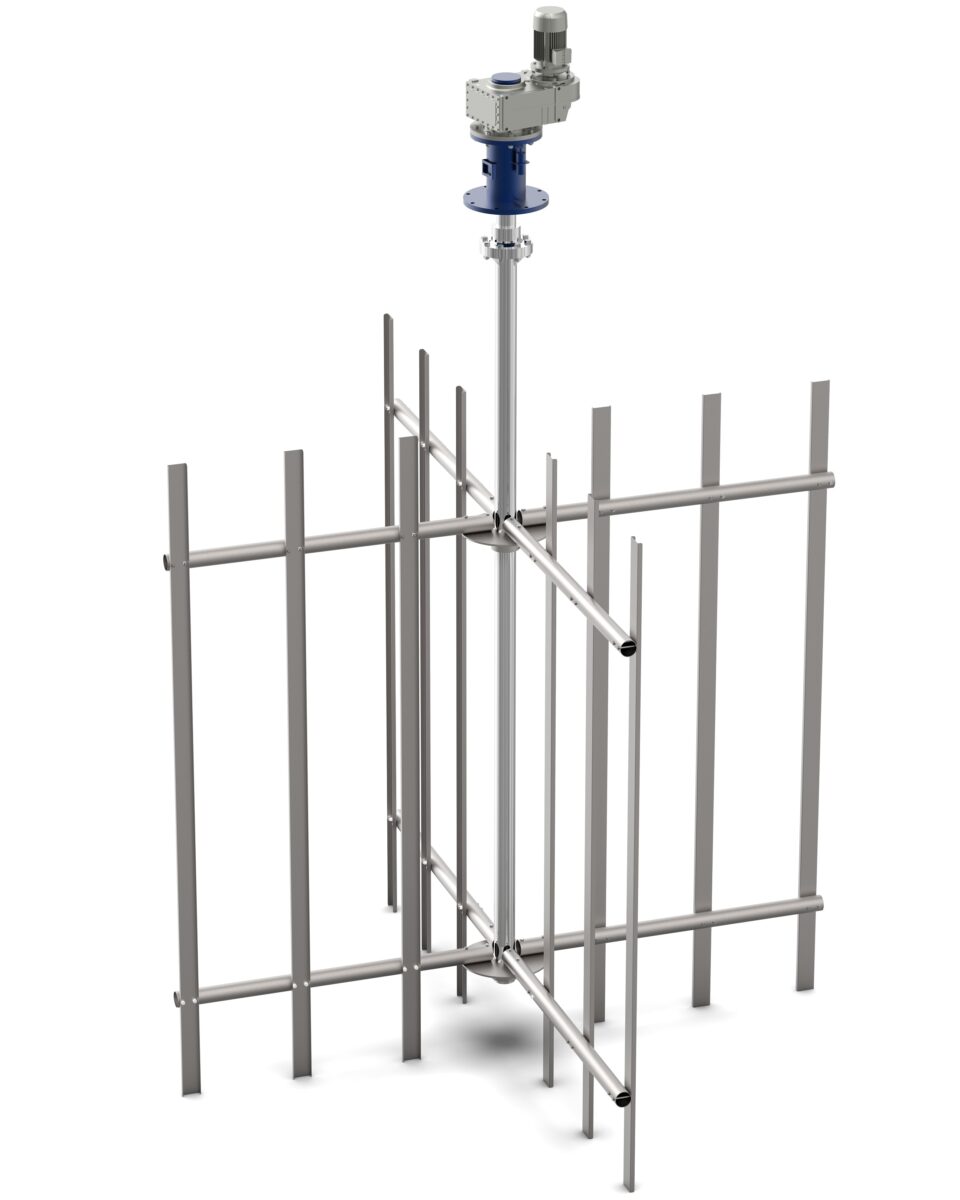
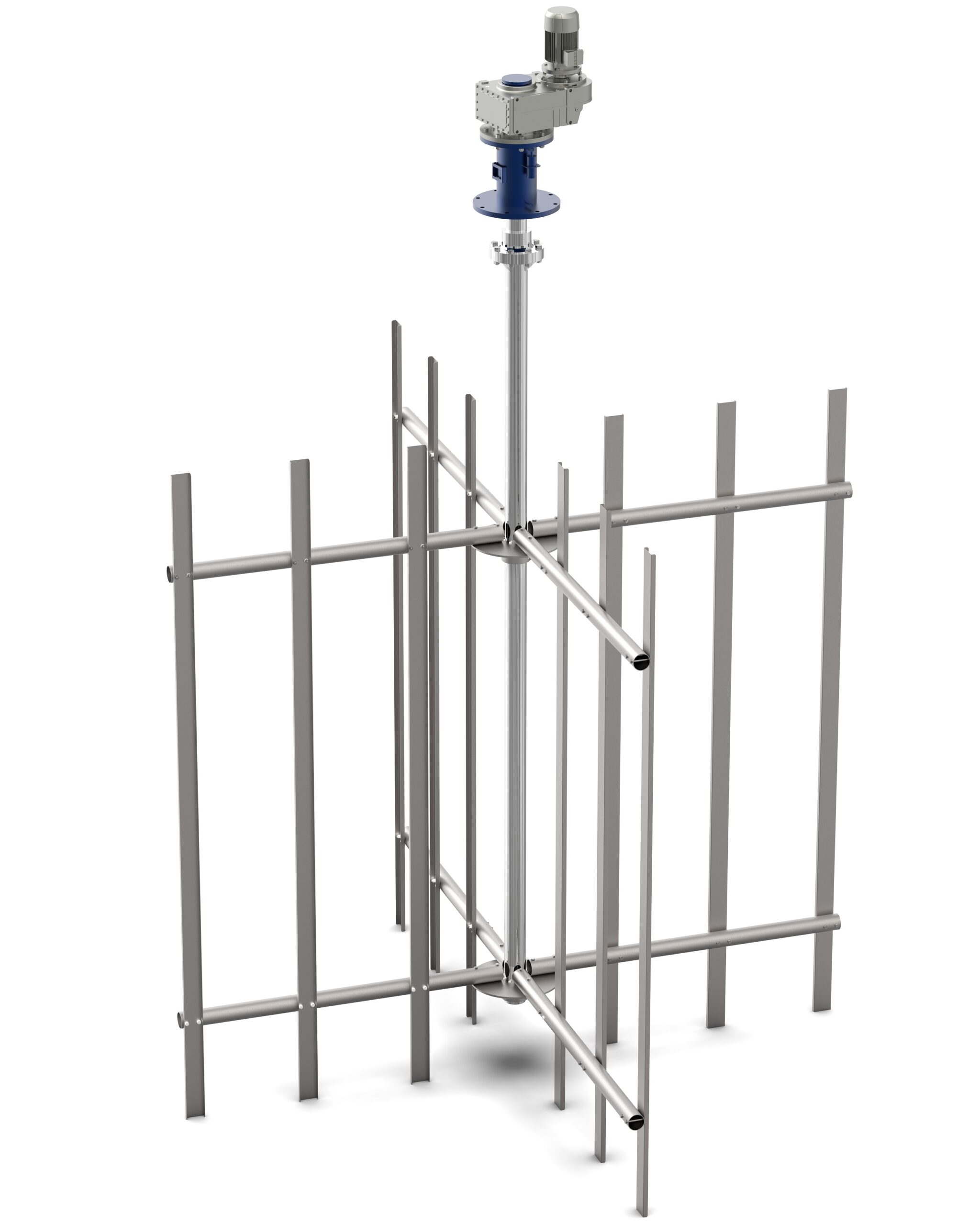
Today, horizontal and vertical paddlewheel flocculation is recognized as one of the most common and effective flocculation methods in the water and wastewater treatment industry. These systems provide gentle and uniform mixing, achieving high efficiency in floc formation and suspended solids removal.
Despite higher initial capital investment and maintenance costs compared to some alternative methods, paddlewheel flocculators remain among the most reliable and widely used systems in treatment plants.
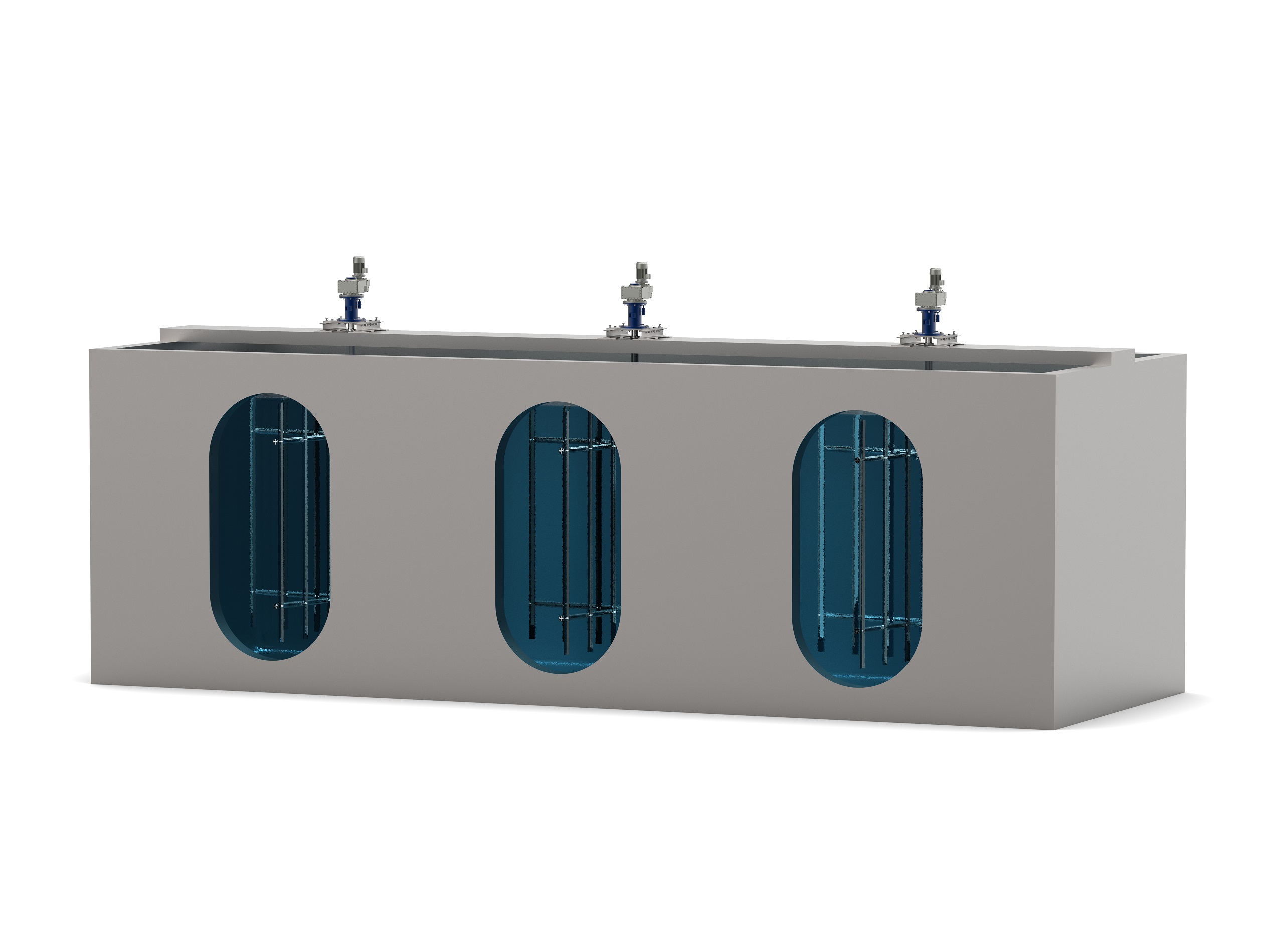
In conventional designs, paddlewheel flocculation systems are typically arranged in a three-stage configuration (three tanks in series), where the velocity gradient (G) is gradually reduced from the first stage to the final stage to provide optimal conditions for floc growth and stability.
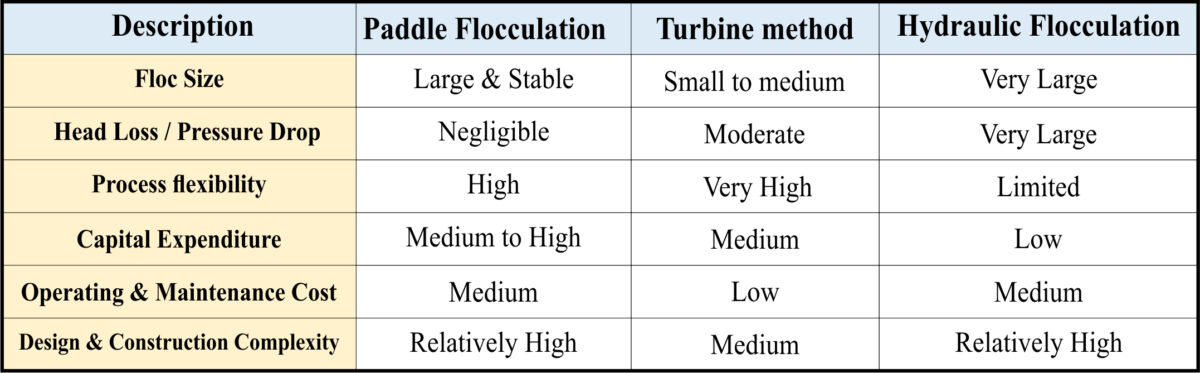
The table below provides a general comparison of different flocculation methods