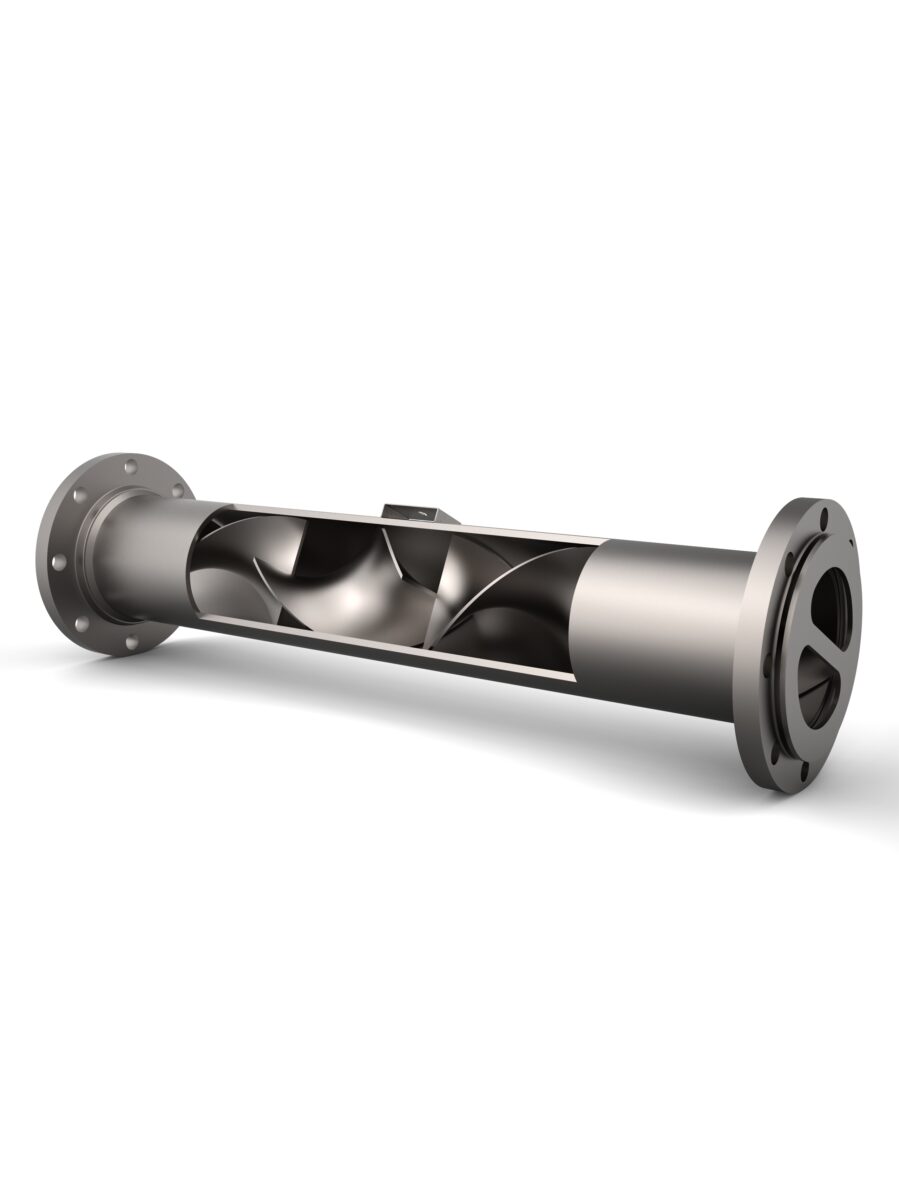
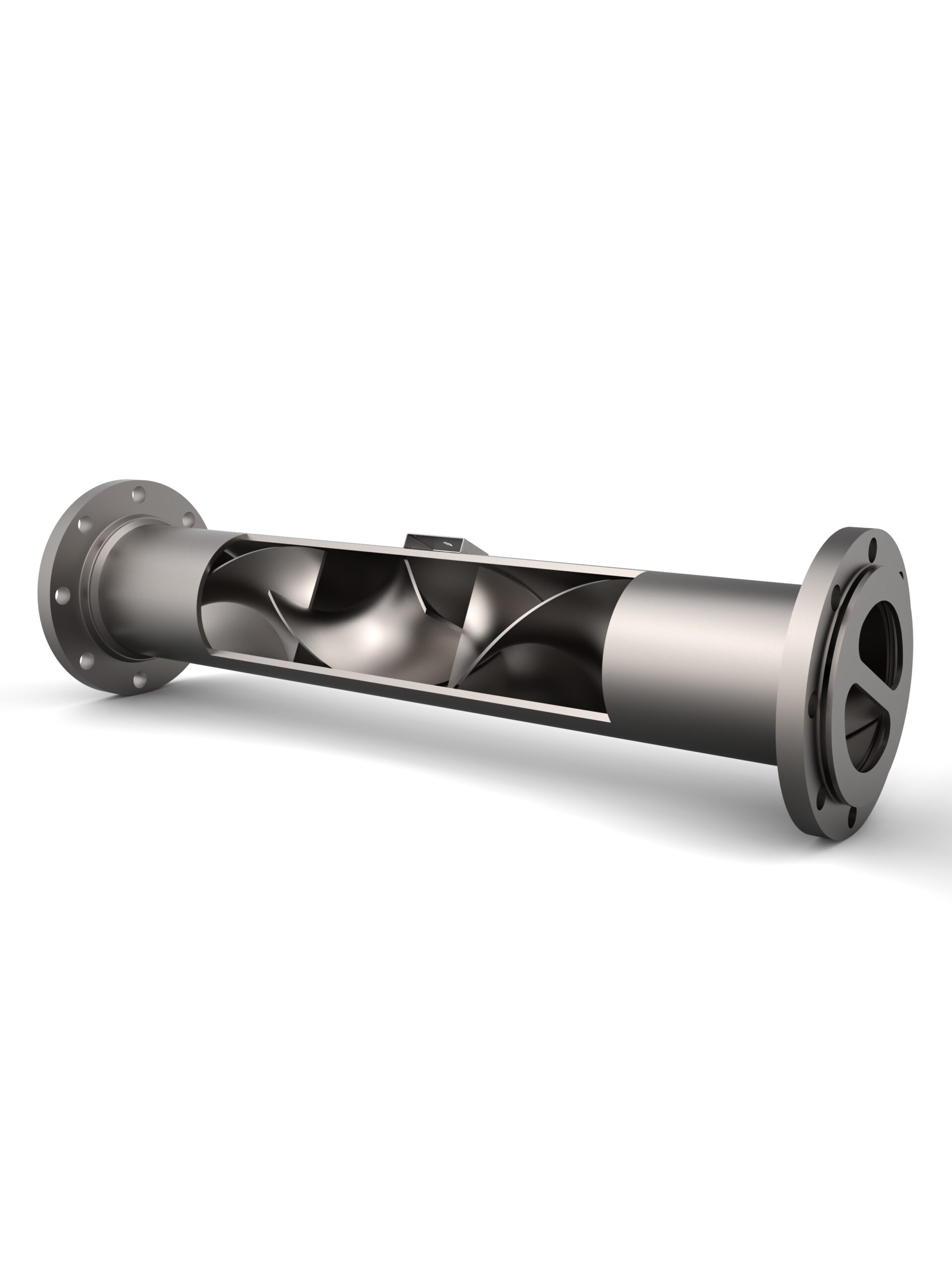
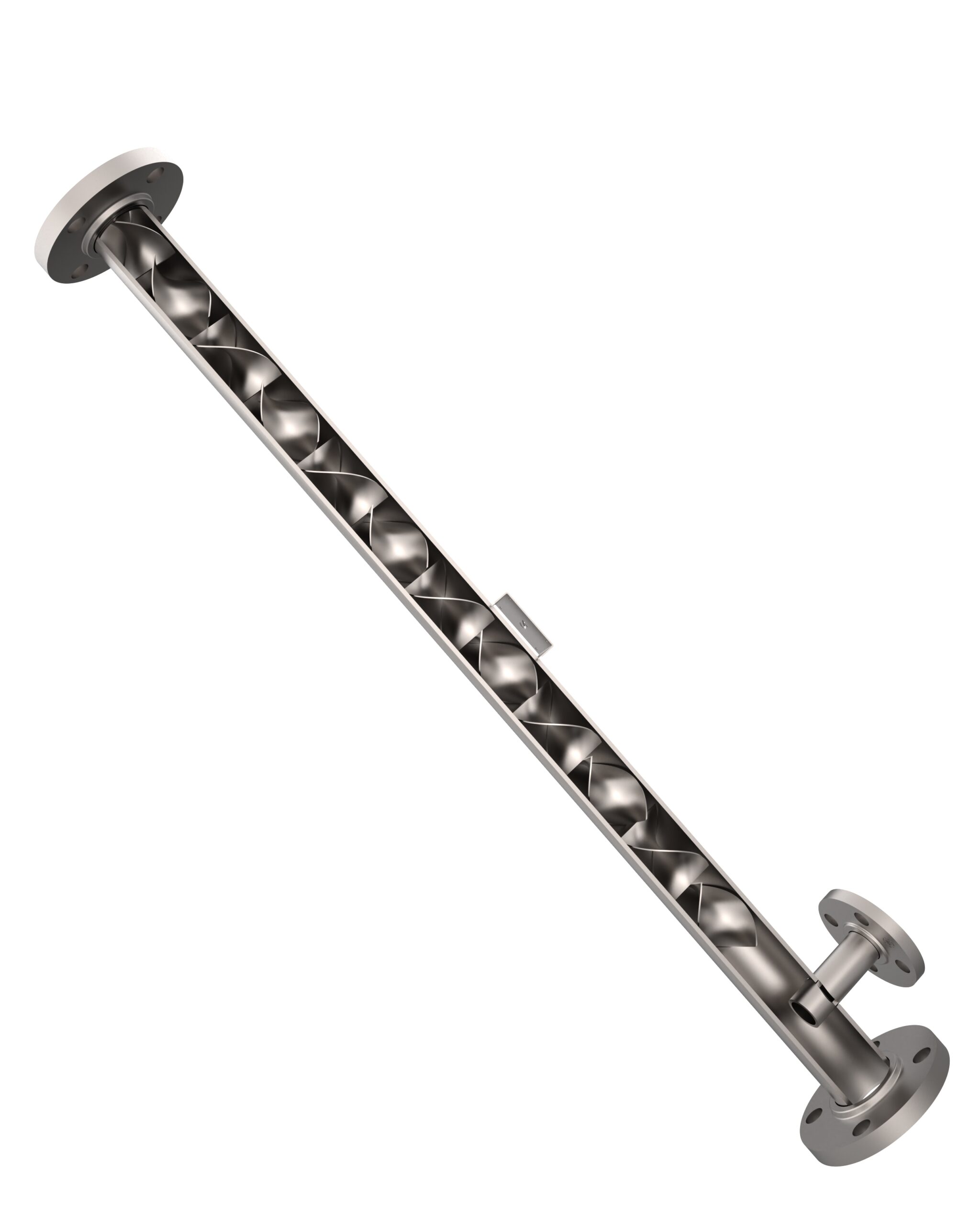
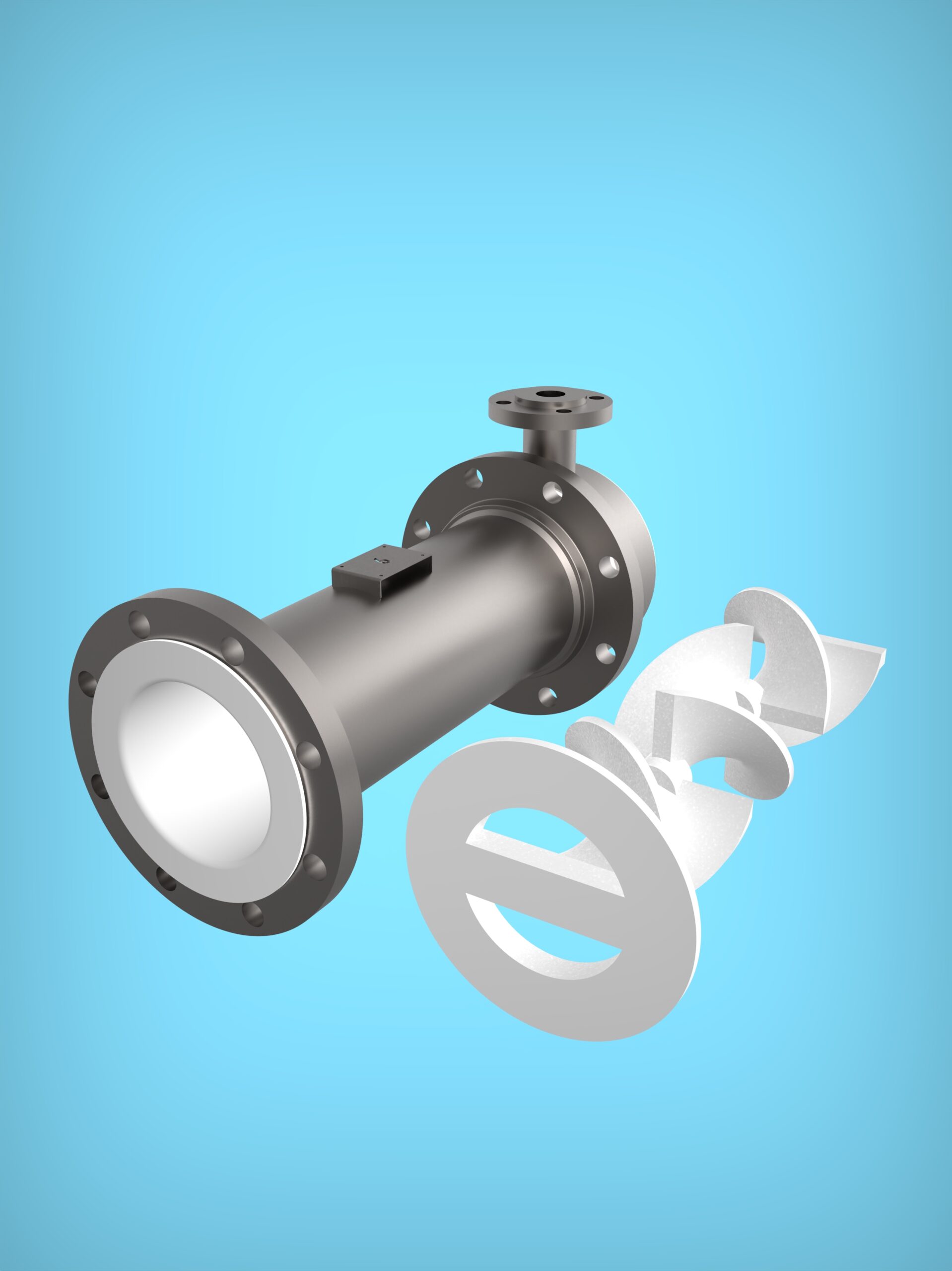
Helical static mixers are widely used across various industries and are particularly suitable for fluids with medium viscosity and density.Their operation is primarily based on turbulent flow conditions (Reynolds number above 4000) and relies on three fundamental mechanisms: flow division, radial redistribution, and flow reorientation.
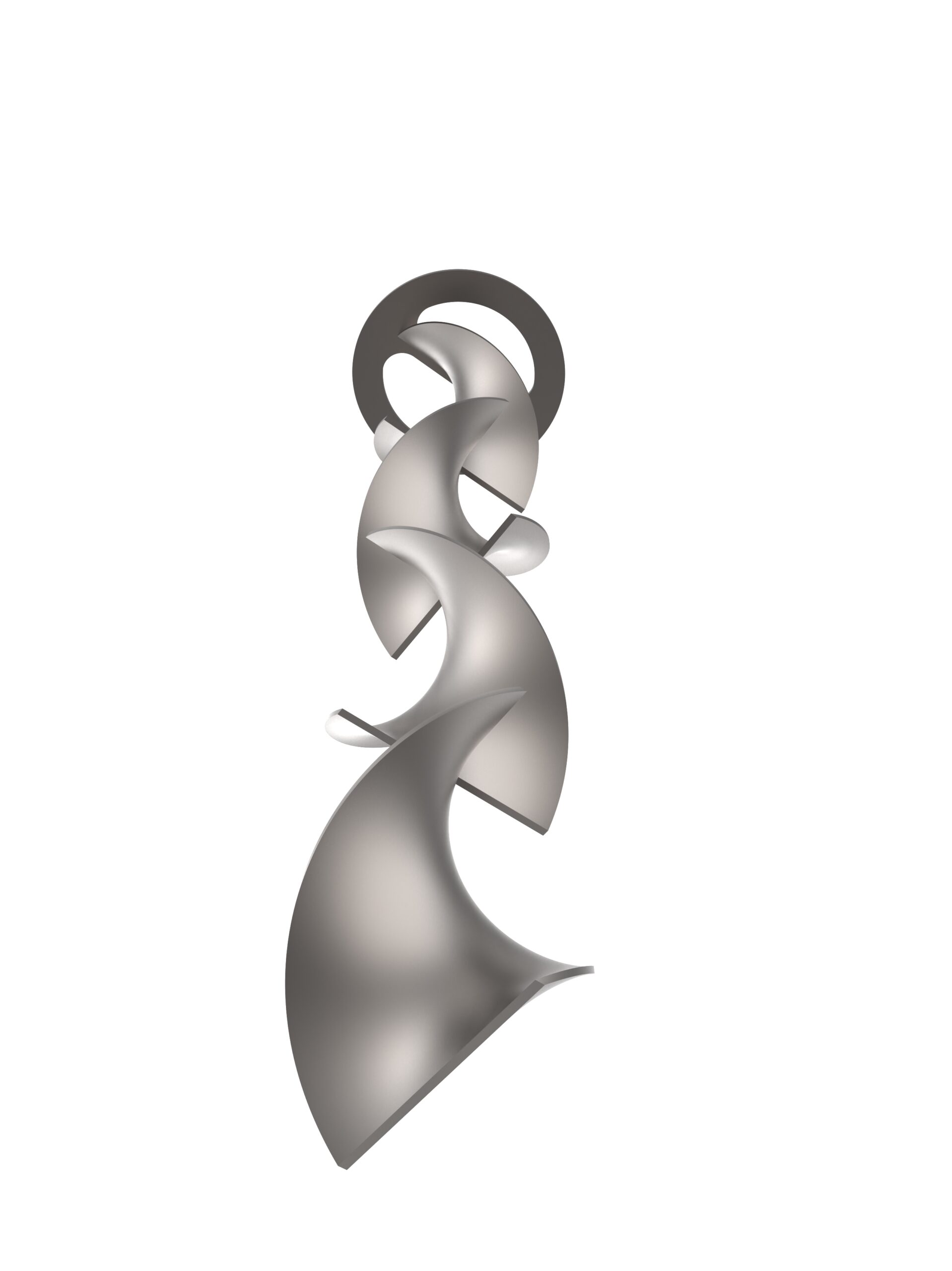
As the fluid passes through each element, it is split into two distinct layers. The total number of divisions after (n) elements is expressed as: x=2n
For example, in a mixer with 18 elements, the flow is divided into more than 262,144 streams, significantly increasing interfacial contact area and enhancing mixing efficiency.
Due to the helical geometry of the elements and the pressure drop along the mixer, the fluid is continuously transported from the center toward the wall and back to the center. This creates velocity gradients and enhances shear-driven mixing.
The flow direction is rotated by approximately 90 degrees between successive elements. This continuous change in direction increases turbulence intensity and significantly improves mixing performance